Supreme Court clears Trump’s $400M White House ballroom, 5 to 4
The Supreme Court cleared the way for construction of President Donald Trump’s White House ballroom to carry on, granting the government a stay on August 31, 2026. The vote was 5 to 4. The order in National Park Service v. National Trust for Historic Preservation lifts a preliminary injunction that had frozen above-ground work on the site of the demolished East Wing.
What the majority didn’t do is decide whether the project is legal. It held only that the government is likely to prevail in showing the National Trust lacks Article III standing, the constitutional requirement that a plaintiff show a real injury before a federal court can hear a case. The stay runs until the Court disposes of a petition for certiorari that the government has yet to file.
Today, we do not pass upon the legality of the government’s East Wing project.
Per curiam opinion, National Park Service v. National Trust for Historic Preservation, August 31, 2026
Standing came down to one person. The Trust relied on a declaration from a single member, Alison K. Hoagland, who lives in Washington DC and expects to visit the neighborhood around the White House about once a month. She said the finished ballroom’s “scale,” “height” and “massing” would injure her “aesthetic, cultural, and historical interests.” The majority read that as taste rather than harm, writing that “mere offense, disagreement, or distaste does not qualify as a concrete and particularized injury under Article III.”
That distinction reaches past one building. The Court has found standing for aesthetic injuries in environmental cases, and it separated them from this one on the ground that those plaintiffs alleged “more than mere offense.” Lower courts had read the same cases to cover historic and cultural sites.
The injunction the justices stayed came from US District Judge Richard Leon on March 31, 2026. He wrote that construction “must stop until Congress authorizes its completion,” and, as NPR reported, that the president “is not, however, the owner!” of the White House. The DC Circuit upheld that injunction on August 7. Judges have gone against this administration before, including the ruling that called the Pentagon’s Anthropic blacklist illegal.
The money is where the record gets contested. The White House puts the ballroom at $400 million paid for by Trump and private donors, according to Business Insider’s timeline of the project. Internal Clark Construction documents reported by The Washington Post put the total at $600 million, with over half of it marked as coming from taxpayer-funded sources including the Secret Service and the White House Military Office.
| Figure | What it covers | Where it comes from |
|---|---|---|
| $400 million | Ballroom cost, described as privately funded | White House, via Business Insider |
| $600 million | Contractor’s internal total, March 2026 | Clark Construction documents reported by The Washington Post |
| $385.8 million | White House complex security upgrades under an interagency agreement | Senior administration official, via Business Insider |
| $2,475,000 | This fiscal year’s appropriation for Executive Residence maintenance | Roberts dissent |
Chief Justice John Roberts dissented, joined by Justices Sotomayor, Kagan and Jackson. He’d have found the construction likely unlawful under 40 USC 8106, which bars any building on federal park grounds in Washington DC without express authority of Congress. Congress appropriated $2,475,000 this fiscal year for Executive Residence maintenance, which he wrote likely doesn’t authorize using hundreds of millions in private donations to tear down the East Wing. Congress hasn’t voted on the ballroom itself, and that habit of leaving the hard call to somebody else is familiar from the 1,561 AI bills filed in 45 states.
Today’s decision is no victory for the separation of powers.
Chief Justice John Roberts, dissenting
The National Trust took the same reading. Brent Leggs, its president and CEO, said the group was “deeply disappointed” and stressed in a statement on the ruling that “the majority did not weigh in on whether the ballroom project was in fact legal.” He said the case is still live on the merits, and that each president is a temporary steward of the People’s House without unilateral authority to redesign it.
Even so, the doctrine the Court used to get there is now murkier than it was. Writing at Lawfare, senior editor Molly Roberts argued the ruling “adds no clarity at all to standing doctrine” and instead “only casts further confusion on an already muddy matter.” Her piece on the ballroom non-decision sets out the three readings available: aesthetic standing is dying, it’s been fenced off to environmental cases, or five justices simply didn’t want the merits.
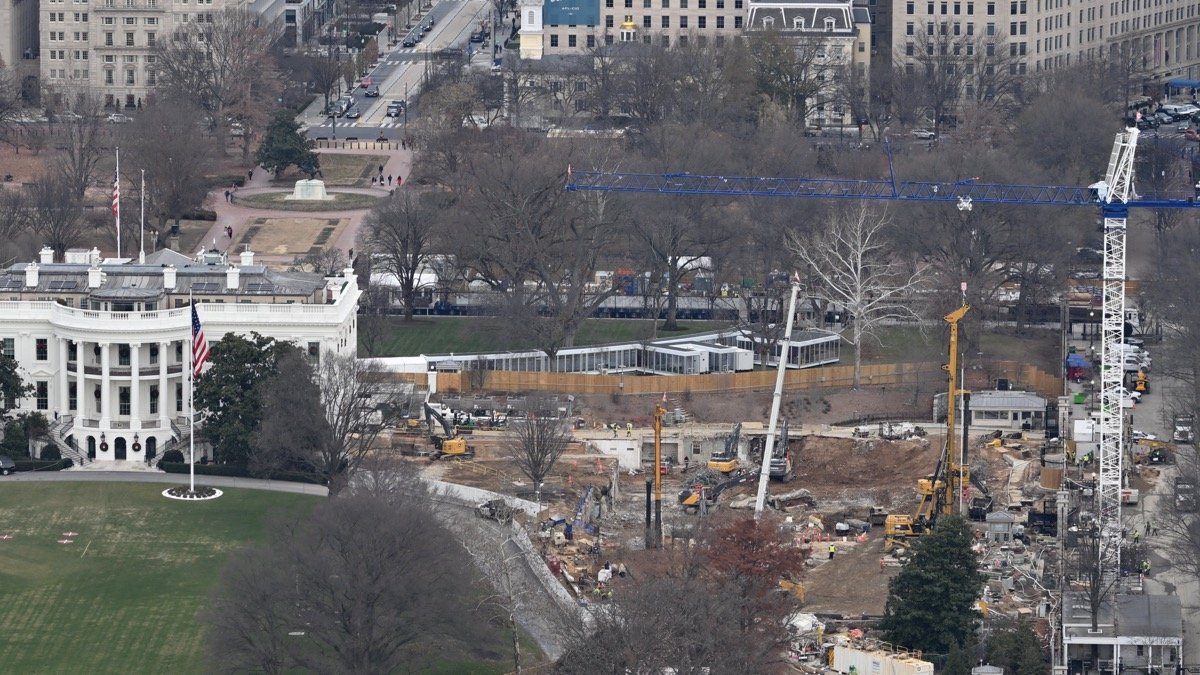
What happens next runs through the certiorari petition. If the Court denies review, the stay terminates automatically, and if it grants review the stay lasts until judgment comes down. The Trust has urged the justices to take up the petition expeditiously. Business Insider reported new structures rising at the site in late August.
Get the daily rundown
One email each weekday with the AI news that matters, every claim linked to its primary source.
Free, one email each weekday, unsubscribe in one click. We never sell or share your address.