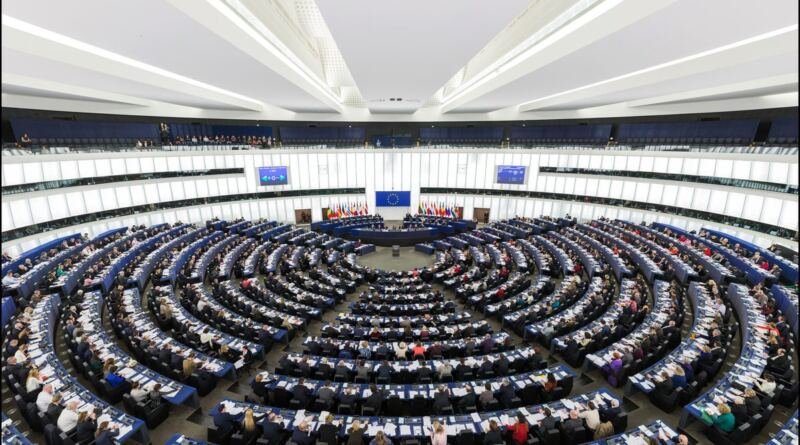
AI defined: the terms with a legal test and the ones without
Four bodies define an AI system and their wordings do not match. The EU gives 68 terms a legal test and excludes chess engines; AGI has no definition anywhere.
Read More
Independent AI news, with every claim linked to its primary source
Independent AI news, with every claim linked to its primary source
How the technology actually works, explained without the research-speak.
Four bodies define an AI system and their wordings do not match. The EU gives 68 terms a legal test and excludes chess engines; AGI has no definition anywhere.
Read More
AI technology is a stack of six layers, from silicon to agents. Each one has its own vendors, its own unit of measurement and its own bottleneck. We walk all six using NVIDIA and Google hardware specs, Epoch AI trend data, two vendor price lists, three papers and two protocol specifications, and name where the top of the stack still falls down.
Read More
Seventy-one years of AI traced through the primary documents that mark each era: the 1955 Dartmouth proposal, the 1972 Lighthill review, the 1980s US funding tables, the 2012 ImageNet scores and the scaling papers that corrected each other. Four lessons survive all of it.
Read More
Every word in the AI vocabulary was coined by somebody for a narrow job, then stretched by somebody else. Here is what AI, gen AI, foundation model, token and agent meant when they were first written down, and who wrote them.
Read More
The phrase covers four different products: rented frontier APIs, open weights you download, the cheap tiers inside both, and models billed per second of video. Here is what each one costs in August 2026.
Read More
Strawberry might be two tokens. The model is being asked to count letters inside symbols it cannot see inside.
Read More
The model never touches your repository. It names a tool and supplies arguments, and your code decides whether to run it.
Read More
The mechanism is simpler than the capability suggests, and unusually predictive of where these models fail.
Read More
We specify a training process, not a design. Nobody writes down what the finished network does, which means nobody starts out knowing.
Read More
A transformer does fixed computation per token, so extra tokens are the only way to spend more effort. That constraint explains the gains and the bill.
Read More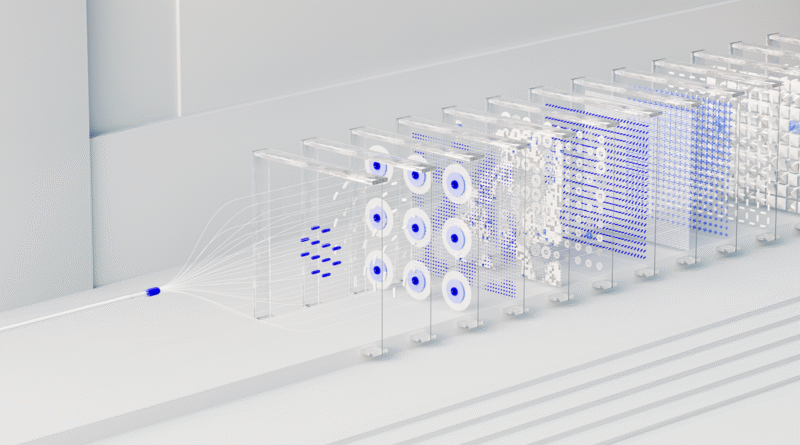
Public human text runs out between 2026 and 2032. Generated data fixes that only where a checker exists, which is a much narrower set of tasks than the pitch suggests.
Read More
OpenAI found a 1.3B tuned model was preferred over 175B GPT-3. The three stages, the alignment tax, and whose preferences get encoded.
Read More