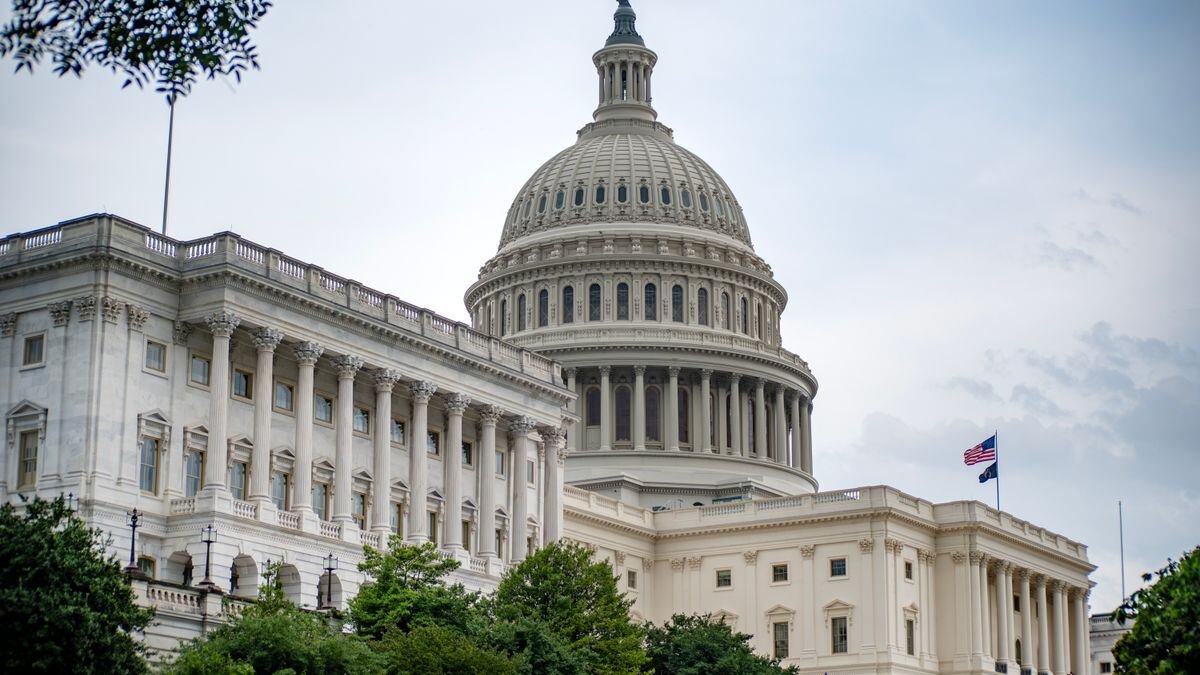
45 states filed 1,561 AI bills, and Congress still has not acted
How many AI laws does an American company have to comply with? As of March 2026, lawmakers in 45 states had introduced 1,561 AI-related bills, more than the entire volume of 2024, and there’s still no comprehensive federal statute.
The result is a compliance problem that has nothing to do with technology and everything to do with geography.
What the state AI legislation patchwork looks like
The clearest illustration is hiring. A company using AI-assisted hiring tools across five states must simultaneously satisfy California, Colorado, Illinois, New York and Texas, each with different definitions of prohibited algorithmic discrimination, different audit timelines and different disclosure obligations.
Not conflicting requirements you can satisfy with the strictest option, necessarily. Different definitions of what the thing even is.
One hiring tool, five states, five definitions of algorithmic discrimination. The software is identical in each.
Several state laws took effect on 1 January 2026, so this stopped being theoretical at the start of the year, according to Baker Botts’ law update.
Why federal action stalled
States moved because Congress didn’t, which is the ordinary pattern when a technology outruns legislation.
The current administration has taken a deregulatory approach, revoking earlier federal AI safety requirements while signalling intent to preempt state law, per a 2026 overview of US AI legislation.
That combination is unusual. Removing federal rules while trying to block state rules leaves a gap that somebody eventually fills, and states are the ones filling it.
The subject matter tends to be concrete rather than philosophical, which is why states could move at all. Hiring, insurance, healthcare decisions, deepfakes in elections and disclosure when you’re talking to a machine are all tractable in a way that regulating capability is not.
Existing sector rules apply on top. Anti-discrimination law, consumer protection and medical device regulation already reach AI systems without mentioning them, so a company can be non-compliant under statutes written decades before the technology existed.
The preemption fight
On 20 March 2026 the White House released a National Policy Framework for Artificial Intelligence, urging Congress to replace the state patchwork with a single national standard rather than what it called a fragmented set of state regulations.
| Instrument | Binding? | Effect today |
|---|---|---|
| State AI laws | Yes | Operative now, several since 1 January 2026 |
| White House Framework, March 2026 | No | Recommendation to Congress, no obligations |
| Proposed federal bills | Not yet law | Would preempt some state law for three years |
The framework creates no immediate compliance obligations, and state laws remain operative unless and until Congress legislates, as Morgan Lewis set out.
So the practical answer for anyone building right now is that the patchwork governs, whatever the framework recommends.
Even the proposed fix is partial
Multiple bills introduced in early 2026 would establish a federal framework and explicitly preempt conflicting state law, which sounds like resolution.
Read the detail and it’s narrower. The current discussion draft would preempt certain state laws regulating AI development for a three-year period while leaving much of the patchwork intact, according to Ropes & Gray.
A three-year preemption is a pause rather than a settlement, and it applies to development rather than to deployment, which is where most of the state obligations actually bite.
The contrast with Europe
Set this beside the European approach and the difference in effect is stark.
The EU AI Act’s Transparency Code took effect on 2 August 2026, and within nine days Anthropic was watermarking Claude output worldwide. One rule, one deadline, an industry-wide response.
The American equivalent this month was a voluntary testing framework agreed by four labs at the White House. Voluntary at the federal level, mandatory at the state level, and inconsistent between states.
What it costs
Fragmentation is a tax that falls unevenly, and that’s the part worth understanding.
A large company runs a compliance function and absorbs it. A ten-person startup deploying a hiring tool faces the same five-state problem with no legal capacity, so the practical effect is to raise the floor for entry.
The practical response most teams land on is to build to the strictest state and apply it everywhere, which is the same logic that makes European rules travel globally. Uniformity is cheaper than segmentation even when the law does not demand it.
Some firms respond by simply not operating in the strictest states, which fragments the market rather than the rules, and is a worse outcome than either regime intended.
Analysts tracking the divide note the same asymmetry, that a national framework without legislation behind it leaves companies planning for two possible futures at once.
The case for the patchwork
The obvious argument is that fragmentation is inefficient and preemption is therefore good. It’s worth hearing the other side properly.
States legislate faster than Congress and can correct mistakes faster. They also function as policy experiments, which is how a great deal of American regulation has historically been developed before national adoption.
And a preemptive federal standard is only an improvement if it’s a good standard. Replacing five imperfect state rules with one weak national rule is deregulation wearing the language of simplification.
Which is the real argument underneath the procedural one. Preemption is usually sought by whoever expects the national standard to be looser than the state ones it replaces, and both sides know that.
What to watch in state AI legislation
Whether any preemption bill actually passes is the whole question, and until it does the framework is a recommendation with no force.
Watch the scope if one moves, specifically whether it covers deployment or only development, because that distinction decides whether the hiring-tool problem goes away.
The bill volume is worth watching too. If 1,561 introduced bills becomes a comparable number enacted, the compliance surface grows faster than any federal fix can catch it.
Elections are where the patchwork is most visible to ordinary voters, with 33 states now running different deepfake rules into the same midterm cycle.
And watch enforcement in the states that already have laws in force. A statute nobody enforces changes nothing, and the first meaningful action tells companies how seriously to price this. As with all of this, check current status before acting, since the position moves quickly and none of it is legal advice.
Get the daily rundown
One email each weekday with the AI news that matters, every claim linked to its primary source.
Free, one email each weekday, unsubscribe in one click. We never sell or share your address.