DOJ rebrands AI as “Super Intelligence” in its $300M chip smuggling case
The Justice Department announced a $300 million Nvidia chip smuggling case on 1 October, and its press release never used the words “artificial intelligence” or “Nvidia” at all. It called the hardware “Super Intelligence (SI)” technology instead, seven times by our count. The 22-page indictment that release was announcing, returned by a grand jury two days earlier, says “artificial intelligence” and names Nvidia Corporation 11 times.
Greg Lui, 38, also known as “Yiu Kong Lui”, of San Gabriel, California, was arrested that Thursday. The indictment identifies him as chief executive and registered agent of Earthmade Computer Inc., a City of Industry corporation set up on or about 10 November 2023. If he’s convicted of all of it, he faces 20 years on the export conspiracy count, 20 on money laundering conspiracy and 10 on outbound smuggling.
SI is the defining technology of the era.
John A. Eisenberg, Assistant Attorney General for National Security, via the Justice Department
Ars Technica reported that the SI label is Trump’s attempt to rebrand artificial intelligence. What the filing shows is how far that rebrand has travelled, and how unevenly. It’s now the vocabulary of the press shop while the grand jury’s own charging language stays unchanged, in a case built on rules written for “advanced computing” chips.
The FBI named a buyer the indictment does not
The release quotes Assistant Director Roman Rozhavsky of the FBI’s Counterintelligence and Espionage Division saying the investigation revealed that Lui “allegedly sold the Chinese government hundreds of millions of dollars’ worth of American Super Intelligence technology, in clear violation of U.S. export control laws”. But the indictment says something narrower. Paragraph 11 defines the recipient as the “Chinese Purchaser”, described as “a Chinese industrial company based in Hangzhou, China”. The phrase “Chinese government” does not appear anywhere in the 22 pages.
| Detail | Indictment, filed 29 Sept | Justice Department release, 1 Oct |
|---|---|---|
| Term for the technology | artificial intelligence | Super Intelligence, SI |
| Chipmaker | Nvidia Corporation, 11 mentions | not named |
| End buyer | industrial company in Hangzhou | the Chinese government, per the FBI |
| Paid to Earthmade | $80M plus $96M | more than $176M |
| Scheme window | Oct 2023 to 12 Aug 2026 | 2023 to 2024 |
That money row matters because one of the two numbers in circulation is wrong. Paragraph 35 says that between January and October 2024, Earthmade received over $80 million from one Malaysian transshipment company and $96 million from a second. That totals $176 million, which is also the figure the Justice Department printed. Business Insider reported that Lui’s company was paid “over $180 million”, and nothing in the filing supports it.
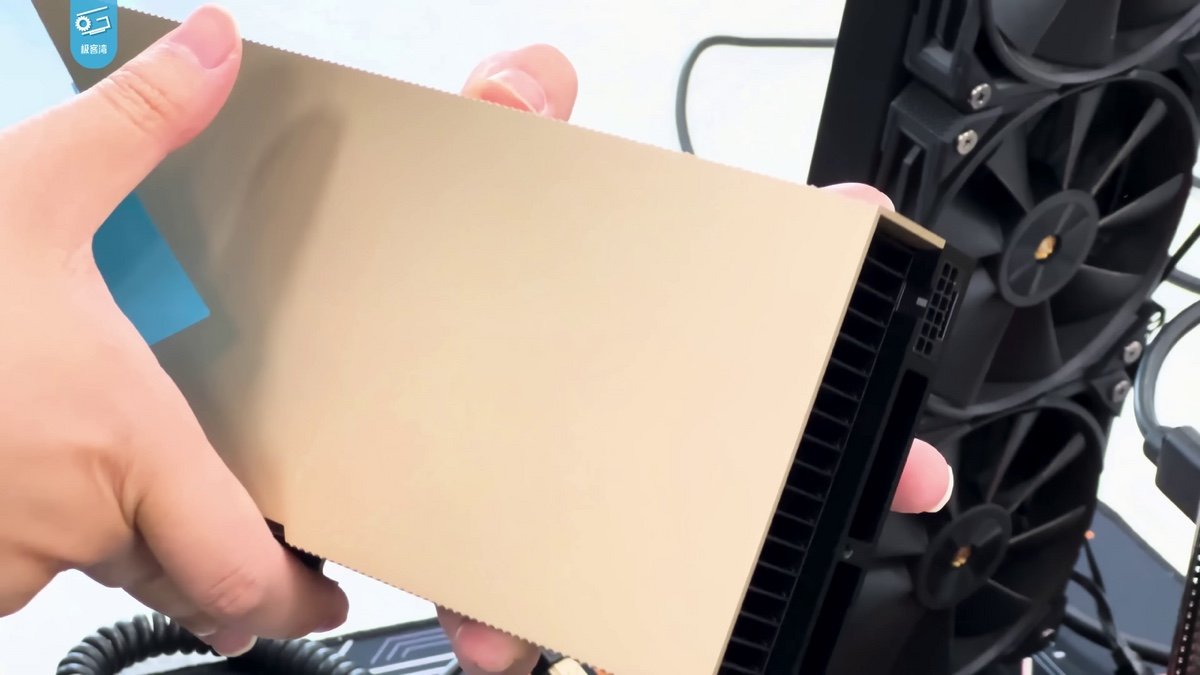
The chip list is wider than the coverage suggested too, which matters because the reporting framed this as a data centre story. Paragraph 24 puts four products under export classification 4A090.a: Nvidia A100 and H100 GPUs, plus PNY GeForce RTX 4090 and GeForce RTX 5090 cards. Ars Technica’s account named the A100 and H100 only, and no write-up we read mentioned the two RTX cards. The restriction they fall under traces to a 2022 Commerce rule, 87 FR 62186, which the indictment cites directly.
What the charge sheet pins down, and what it hedges
Still, the timeline inside the document isn’t consistent with itself. Paragraph 1 opens with “Beginning in 2024”. Paragraphs 31 and 49 both say the conspiracy ran from no later than around October 2023 “until at least August 12, 2026”, a specific end date nobody printed. The money laundering count is narrower still, running from 28 February 2024 to about 13 December 2024.
The $300 million headline figure gets two different treatments as well, though neither is a tally. Paragraph 1 alleges “over 300 million dollars’ worth” of servers. Paragraph 36 says Earthmade brokered the sale of “almost three hundred million dollars’ worth”. So prosecutors are describing a ceiling rather than a reconciled total, which is worth holding in mind because of how often chip export policy has reversed itself.
This case shows yet again that smuggling is a losing proposition, legally, economically and technically.
Nvidia spokesperson, via Business Insider
Nvidia isn’t a defendant here, though its own position on Washington’s rulemaking has been blunt, with chief executive Jensen Huang calling new AI laws completely unnecessary. But the filing does put its hardware in the middle of the alleged route: 92 servers flown from San Francisco to Kuala Lumpur on Singapore Airlines flight SQ0033 in June 2024, then on to Hong Kong on Cathay Pacific CX722, consigned to the Hangzhou buyer.
Paragraph 25 states that neither Lui nor Earthmade ever applied for or held a Commerce licence for any of it. Prosecutors are seeking forfeiture of the proceeds, with no figure attached. An indictment is only an allegation, and the next thing to watch is whether the government’s filings keep calling the chips SI once a judge is reading them.
Get the daily rundown
One email each weekday with the AI news that matters, every claim linked to its primary source.
Free, one email each weekday, unsubscribe in one click. We never sell or share your address.